Notes from Ojai City Council: Next Steps for Homeless Housing, Financial "Tasks," Legal Fees, Trees, and More
And by "notes" I mean 2,700 artfully arranged words :)

Greetings, readers!
Last week, I previewed the April 14th Ojai City Council meeting. Today, I want to tell you what happened. I want to flag that this is not a comprehensive report, but an overview of the events I found most noteworthy — and there were quite a few — more than I could fit in my social media update. Remember: for a free trial subscription, email andra.belknap@gmail.com.
Let’s go!
The Ojai City Council kicked off the evening of April 14th with a seemingly dry update from Special Projects Manager Christy Billings: a “quarterly progress update” on the City’s “targeted forensic review.”
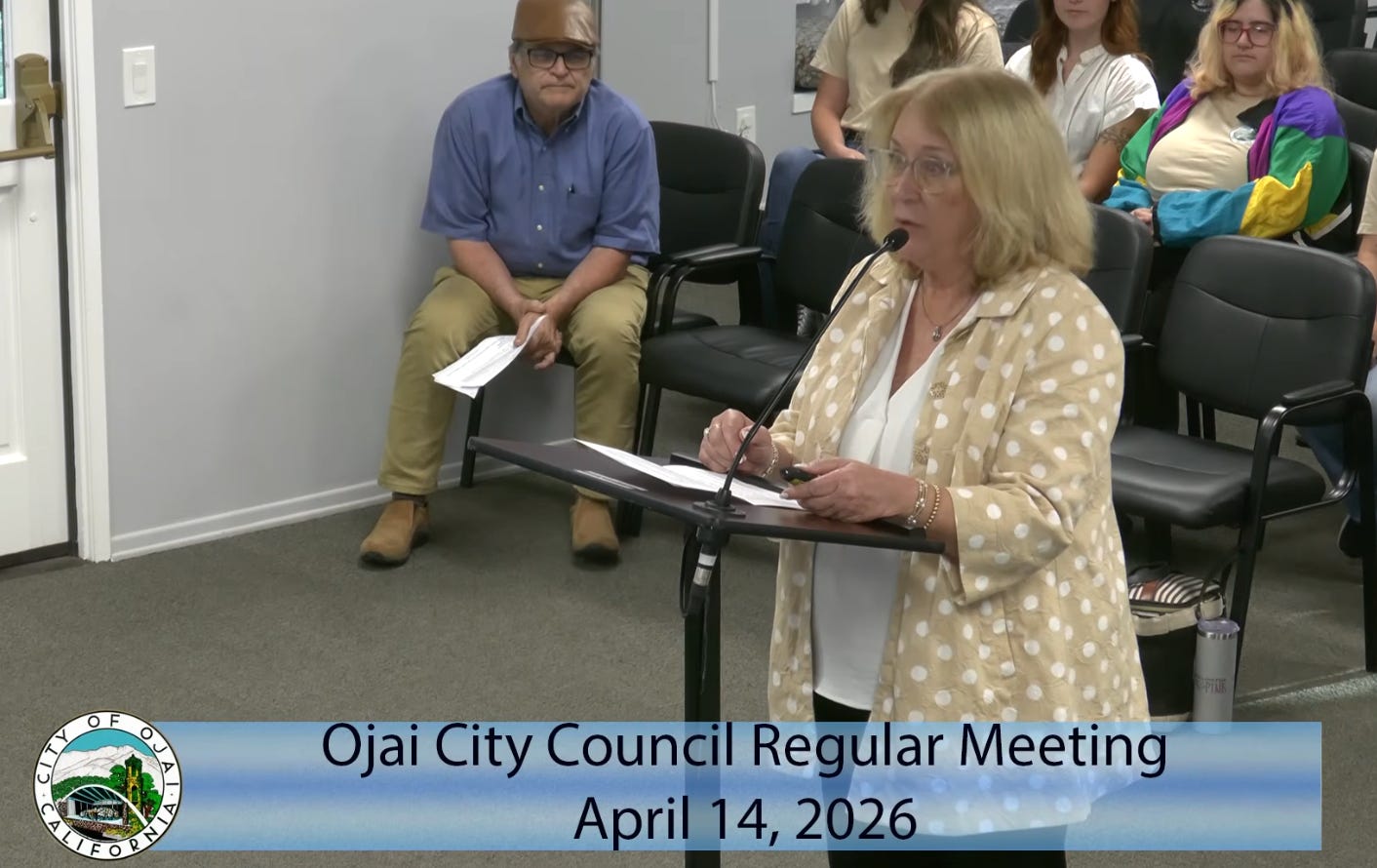
Billings provided an update on a series of tasks. No one acknowledged what exactly necessitated the tasks, or the review.
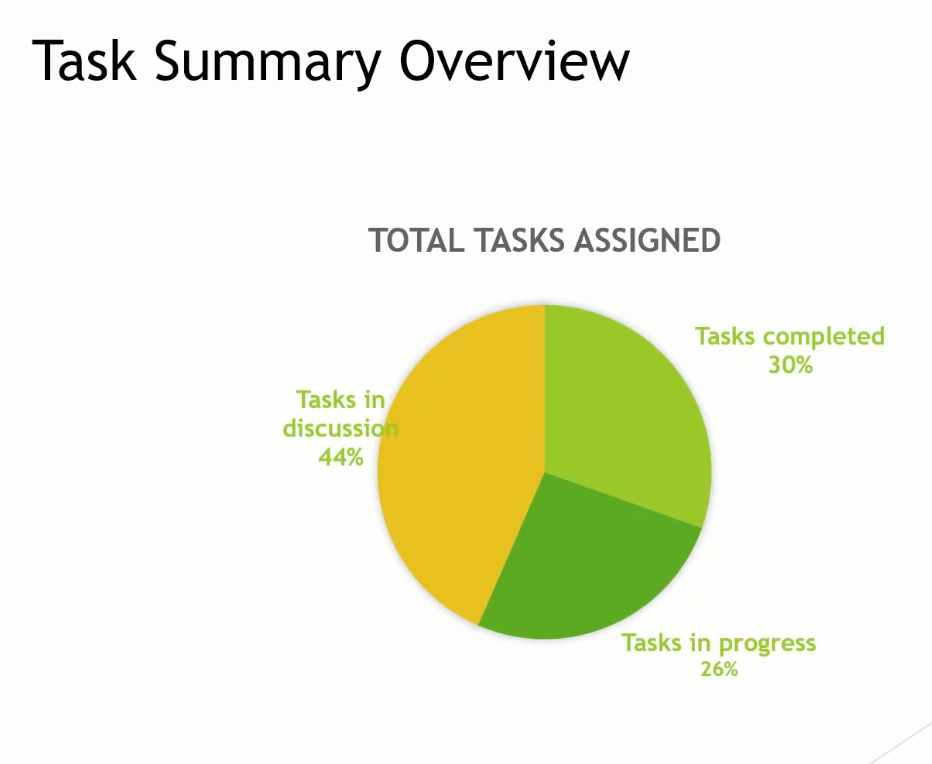
Folks, this is the kind of thing I find to be a little bit funny.1 Because I get why they wouldn’t want to mention the reason for the “targeted forensic review.”
Who remembers this story?
UPDATED: Ojai Assistant City Manager Carl Alameda faces embezzlement charges, jail time

Readers — Ojai’s Assistant City Manager Carl Alameda has been charged by the Los Angeles County District Attorney’s Office (L.A. DA) with stealing approximately $200,000 during his previous position as Assistant City Manager for the City of La Cañada Flintridge
Recall: on the morning of May 14th, (now former) Ojai Assistant City Manager Carl Alameda was charged in Los Angeles County Superior Court with 11 felony counts of embezzlement and 23 counts of insurance fraud, all of which related to his previous employment with the City of La Cañada Flintridge. He pleaded not guilty.
On May 15th, the City of Ojai found out about this episode via press release.2 On May 16th, Alameda was terminated from his position. By May 27th, the City contracted with financial firm Kroll to perform a special forensic financial examination to determine any potential misconduct by Alameda.
Six months later, Sherine Ebadi, Kroll’s Managing Director for Forensic Investigation & Intelligence, provided the answer to the question on everyone’s mind.
“... We did not find any direct evidence that Carl Alameda embezzled or otherwise was engaged in financial misconduct while here at the city,” Ebadi said. “There are caveats that make it difficult for us to say that he did not do it. I can say that I found no evidence of it. It’s hard for me to say he did not do it.”
So, there’s no direct evidence that Alameda misappropriated City of Ojai funds. But, according to Ebadi’s findings, he certainly had the opportunity.
“We had learned from a number of people that had seen [Alameda] that day that he walked out with a very large bag that may have had documents in it,” Ebadi explained. “And when we searched his office, there were virtually no documents in his office… which begs the question, did he in fact take documents with him? And if he did, why? And what did he take? And since they’re paper, it’s very difficult to know what he took.”
Hence, Billings’ tasks — one of which is “finance to have better oversight of spending.” (That one is in progress.)
Obviously, none of this history came up April 14th. One thing about government: all manner of drama is hidden within seemingly boring presentations.
Alameda is next scheduled to appear in Los Angeles County Superior Court May 8th.
Moving along!
Next, we heard from a collection of local young people representing Ojai’s Green Valley Project.
They shared the results of an urban heat island study they conducted in Ojai. Using their results, they identified four privately-owned locations with excessive heat: Adamson’s Towing, Ojai Self Storage, the Ojai Valley Inn, and the Ojai Community Hospital. They plan to approach each business with an offer of oak trees — and the hospital has already accepted their offer.
I say: rock on.
Then we moved into the “non-agendized” public comment period.3 A few residents criticized City Manager Ben Harvey’s use of the phrase “STP,” or “same ten people,” during a podcast conversation about locals involved in government. (I’d argue it’s more than ten people — but whatever.)
City Council regular Larry Steingold (arguably an STP) approached the podium wearing an STP baseball hat. “These people are not a problem to be managed. They are the backbone of civic life,” Steingold declared.
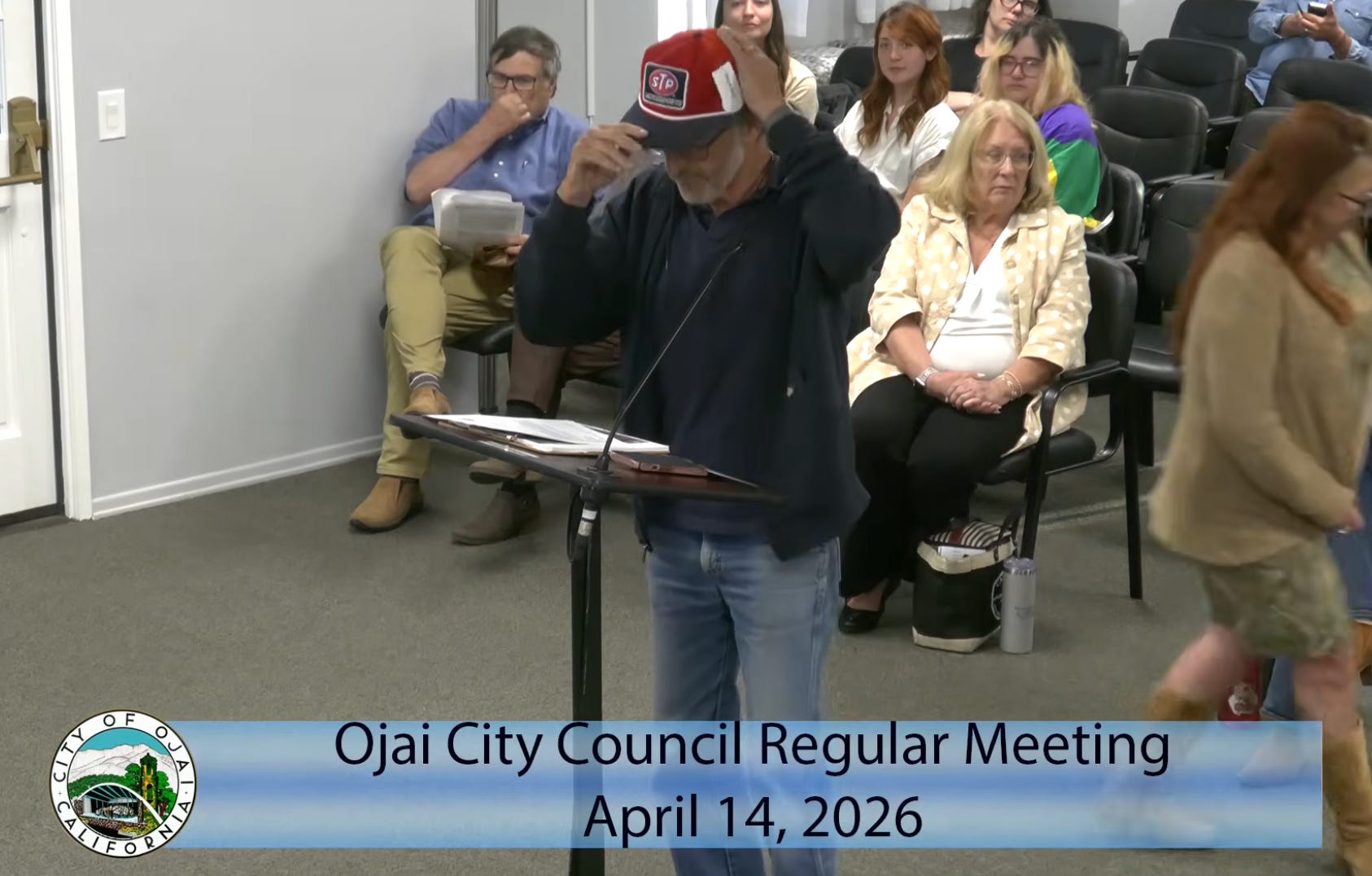
Another arguable STP, Starchild Weivoda, addressed Harvey via Zoom (these public comments come over the loudspeaker with a “voice of God” effect).
“I just wanted to provide the City Manager an opportunity to reaffirm… his appreciation for the public that worked to make the city better and to apologize for any offense his comments may have given.”
… and then there was an awkward silence. It was awesome.4
We also learned that the Ojai Library will be closed for renovations for 6-8 months, beginning as soon as July. (This is extremely impactful news for the members of the public who rely on the library’s air conditioning during the summer months.)
Next, the consent calendar. (The consent calendar is made up of “routine items” that generally don’t require Council discussion.) Councilwoman Leslie Rule took a moment to call attention to the City’s “warrants report” (a summary of recent expenditures) specifically, a $7,681.10 check to the legal firm Meyers Nave.
“I just want to point out that… this settlement and my indemnification cost is now up to $257,000 and counting. So we’re at a quarter of a million dollars,” Rule said.
Side note: the Council, minus Rule, met in closed session two days later, April 16th, to continue the indemnification discussion (aka — the City’s responsibility for Rule’s legal bills).

City Attorney Bethany Burgess reported that “no reportable action” came of the discussion. A mandatory hearing in the Rule v. City of Ojai matter is scheduled in Ventura County Superior Court for the morning of May 6th. The entire conflict originates from statements Rule made during the January 24, 2023 Ojai City Council meeting (one of Rule’s first!) and a lawsuit filed against her by seven locals (Byrne et al v. Rule et al) who say they were harmed. A hearing in the Byrne case — a motion for a summary judgement — is scheduled for the morning of May 15th. The whole thing has become so convoluted that it will require several thousand words to disentangle.
Anyways — after about 45 minutes of the above, the Council came round to the main topic of the evening: contractor bids to build the City’s $12.7 million state-funded permanent supportive housing project for chronically homeless community members.5
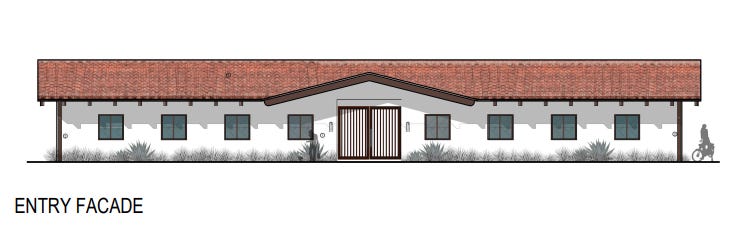
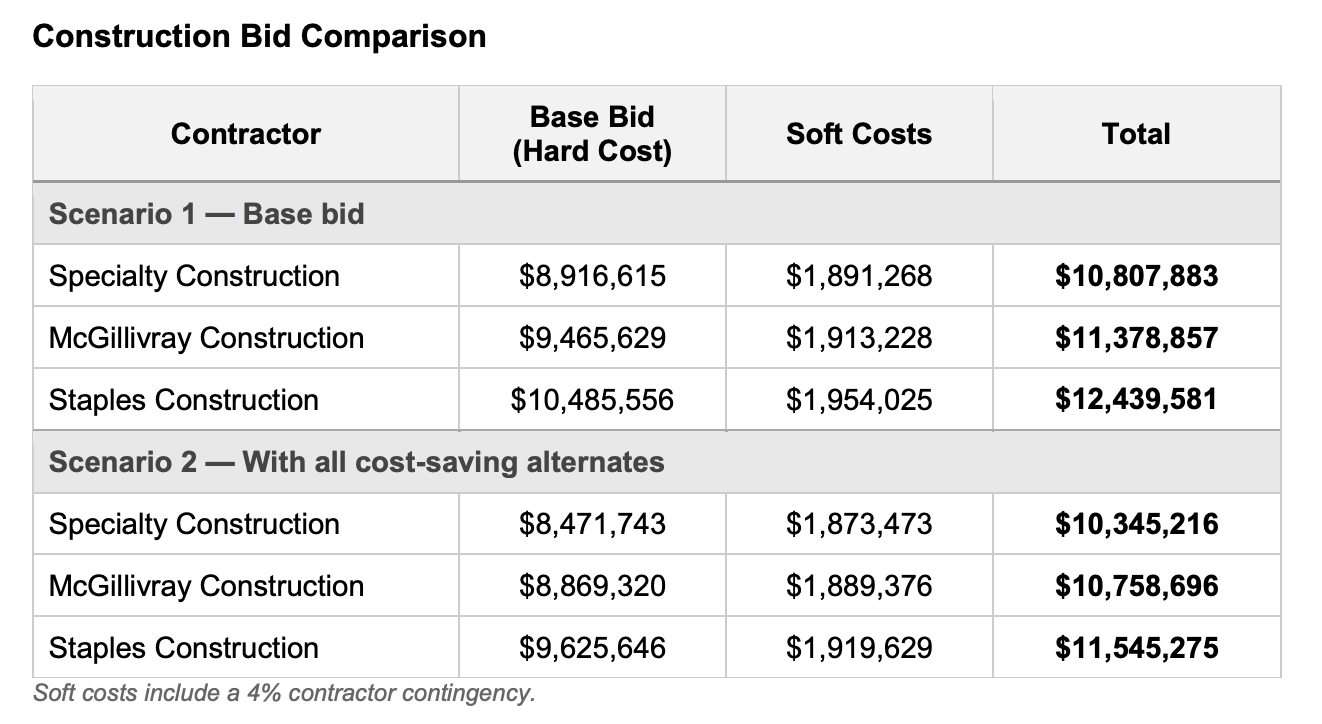
As I described in a pre-meeting brief, three qualified general contractors were asked to provide a project budget under $9.5 million; none could. Each bid came in at over $10 million, even with cost-saving measures.
Developer Dignity Moves, represented at the meeting by Vice President for Programs Jeff Gaddess, put a new funding source on the table: a $1 million donation from the Balay Ko Foundation. (Balay Ko has not responded to my request for comment.)
However, accepting the Balay Ko donation which would require designating five of the 30 housing units for transitional-aged youth (ages 18-24) struggling with homelessness. (This is the population served by Ojai’s Mesa Farm — though they offer interim housing. I’ll also note that Balay Ko financial statements show that they work consistently with Dignity Moves.)
City Manager Ben Harvey kicked off the Council discussion with a summary of the Council’s choices that night, adding, “If you are looking at taking no action, you do have to also consider some of the sunk costs that have taken place so far. You also have to consider that if [the California Department of Housing & Community Development] does ask for the award money back, it will be with interest that the city has earned on it.”
Rule responded directly, “The implication that HCD will take the money back — I just feel like that’s out of the blue… I did feel a little bit of pressure just right now from you about not moving forward with this, which I didn’t really appreciate.”
Project architect Dylan Johnson was on hand to answer questions — and there were many.
Would it be cheaper to transition to a modular design? No, Johnson said, “we determined that single-story stick-built construction was the most cost efficient way to deliver 30 housing units,” (though there are Councilmembers who appear to disagree with his assessment).
Is the public works yard site accessible for disabled residents? Yes, Johnson said. Still — some Council and community members expressed concern about disabled residents’ ability to walk up and down a proposed switch-backed path to the building. “It’s a long path, there’s no question,” Johnson said, “but it is the most reliable, code compliant, durable solution to get folks to town in the absence of a van or some sort of transport.”
What would we have to cut from the project to keep it within a $9.5 million budget? In short, Johnson said, we’ll lose landscaping, storage space, common area appliances, decorative elements, some natural building materials, and acoustic panels. (Or, the City would have to find an alternative way of funding those pieces.) The project’s contingency fund, too, would be diminished, he said.
“As we all know, the bidding process took place in a challenging time in the construction market. Things are expensive. The budget was tight,” Johnson acknowledged.
The vast majority of the members of the public who addressed the Council and/or wrote to them were supportive of the project, urged them to move forward, and accept the Balay Ko donation.
“If the Cabin Village fails, NIMBYism will be this Council’s legacy. It will be our town’s legacy. [Ojai’s] NIMBY status will be legend,” City Hall neighbor Leeana McNeilley told the Council.
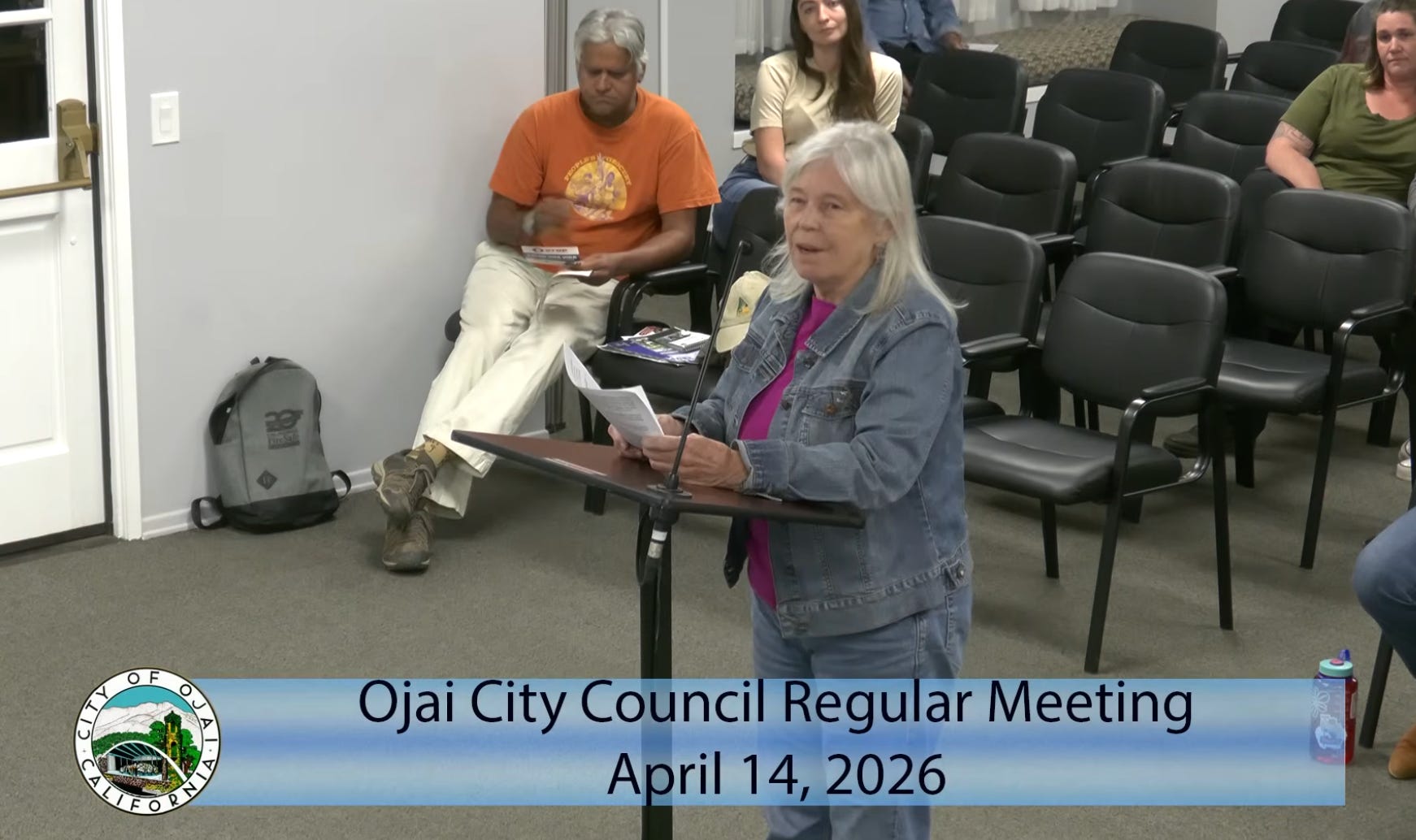
Other speakers were critical of the project’s location and budget, and raised concerns about potential accessibility issues. Gene Sharaga spoke via Zoom, “...the maintenance yard site is the worst possible location for ADA access for its many future disabled and elderly residents,” he said, calling the project’s walking path “a ramp to nowhere.”
Ojai Tent Town resident Melissa Balding addressed those concerns directly.
“Speaking for the elderly who live here — because I live here — they would much rather be able to go up a ramp than have to live in the dirt or what we’ve already lived in. Which is hell.” Balding continued, “Everybody here that I live with can make it up a ramp, and they would be happy to do so, and it would work.”
Once the discussion returned to Council, Rule directed attention to a one-page document asserting that the full ERF project could be constructed with modular units on City-owned land east of the current Ojai Tent Town.
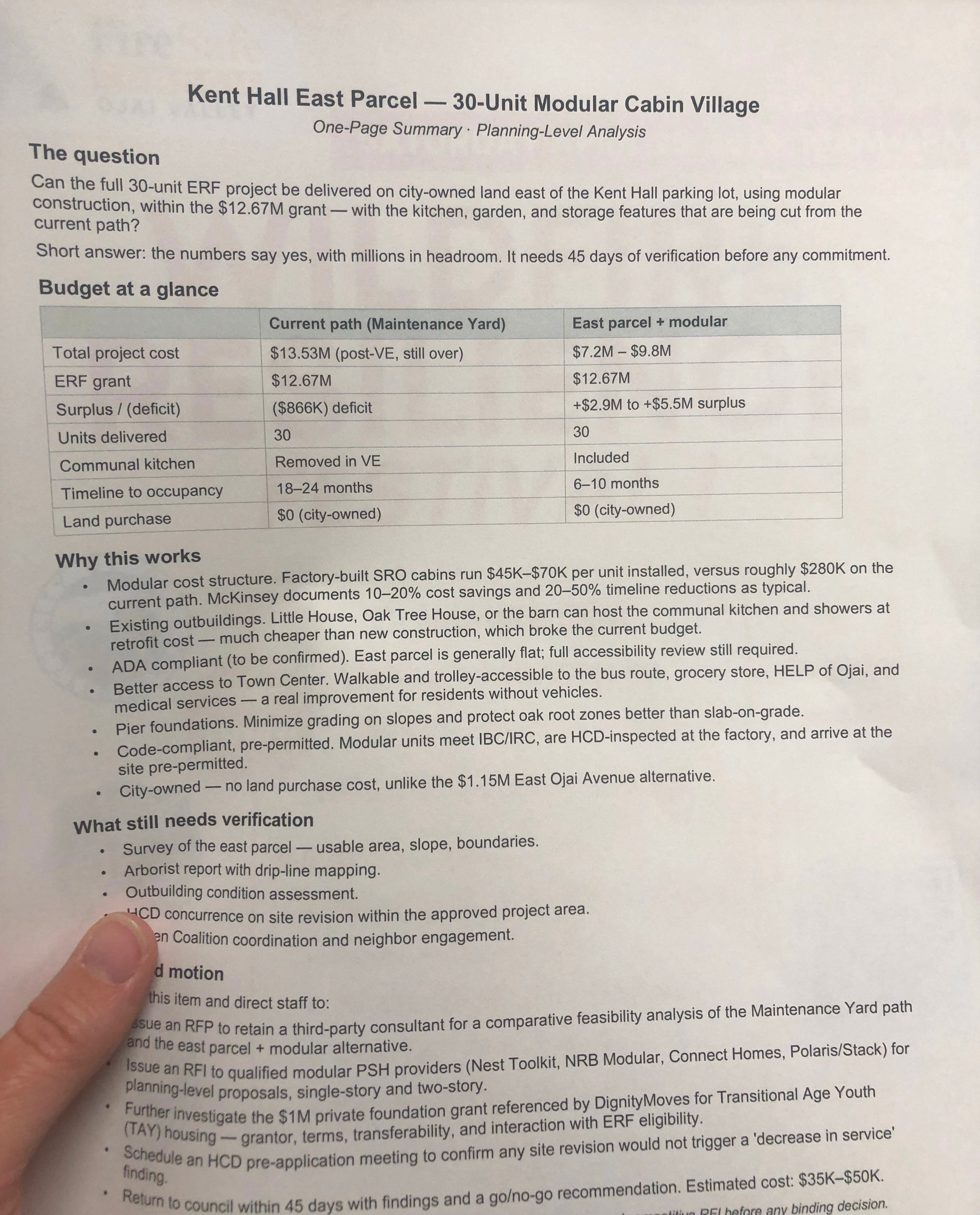
(We have heard a proposal for this approximate location in the past — one major wrinkle is that the area is currently being developed into an “Eco Center” by the Ojai Valley Green Coalition.)
“Right now, the maintenance yard to me is unsupportable,” Rule said. “There is a big pile of toxic soil there that needs to be removed.”
She’s right about the toxic soil — arsenic and lead were detected during an environmental assessment of the future housing site. According to Community Development Director Lucas Siebert, the remediation process could begin as soon as April 20th, and would take approximately five days to complete. Here’s the update from City Manager Harvey as of April 24th: “We’re in the process of coordinating with our contractors at this moment on a start date. We anticipate this being VERY soon, but don’t (yet) have final confirmation.”
Councilman Andy Whitman expressed skepticism about the permanent supportive housing model generally, as he has in the past.
“One of the things that concerns me about going with a permanent supportive housing approach is that we’re only helping 30 people. I would much rather… help a lot more people, especially people who are actually housed, but they’re close to being [unhoused].”
Whitman also suggested splitting the project between the public works yard site and the Council’s recently acquired property at 503 S. Ventura St, suggesting it could be a better location for the project’s disabled population. Gaddess said two locations would increase the project’s future operational costs.
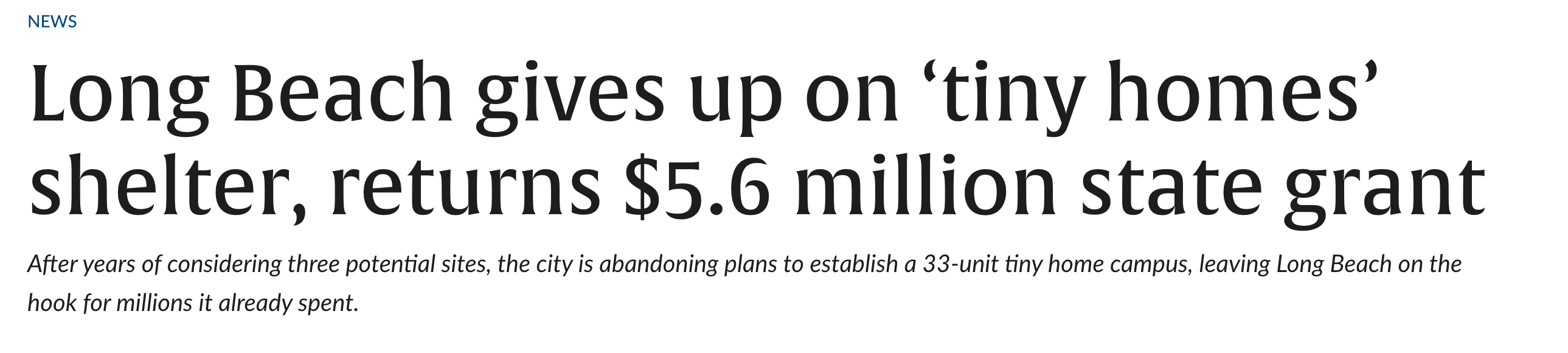
Councilwoman Kim Mang, who has consistently voted against the project alongside Whitman, signaled interest in pivoting to a modular project, as opposed to Johnson’s custom-designed building. Mang also suggested that the City of Ojai could potentially purchase modular housing units from the City of Long Beach, which abandoned its own state-funded interim housing project for the chronically homeless after failing to find a suitable location.

Meanwhile, Mayor Andy Gilman and Councilwoman Rachel Lang showed interest in accepting the lowest project bid, courtesy of San Luis Obispo’s Specialty Construction, and breaking ground. (If the Council decided to move forward, Johnson said, the project could break ground within six weeks.)
Both members questioned the specifics of the Balay Ko donation offer, specifically whether Ojai would be able to delegate transitional-age youth (TAY) units to community members of other ages. That remains an open question.
Whitman, Mang, and Rule all expressed a level of distrust for Dignity Moves and the proposed budget. “It has been horrible,” Rule said. “It has been horrible since September 9th when Dignity Moves gave us a budget that was not real.”
Rule also recognized that she was the swing vote in the equation. “I would hate for this vote to go down,” she told her Council colleagues.
After significant discussion, there were three separate motions on the table. Gilman called for a vote to hold the project to a $9.5 million budget, pending additional discussion with the Balay Ko Foundation regarding the $1 million dollar donation. His motion also included a feasibility study for tiny units at 503 S. Ventura St, as an “extension” of the housing project. (Recall: the City recently performed a feasibility study regarding moving the entire 30-unit project to the 503 property, at Rule’s request.)
The question came to Rule first.
Her response: “Come back to me.”
When the vote came back around to Rule it was 2-2; noes from Whitman and Mang and yeses from Gilman and Lang. She remained the swing vote.
“It’s the wrong project,” Rule said, before reciting her concerns for the next four minutes.
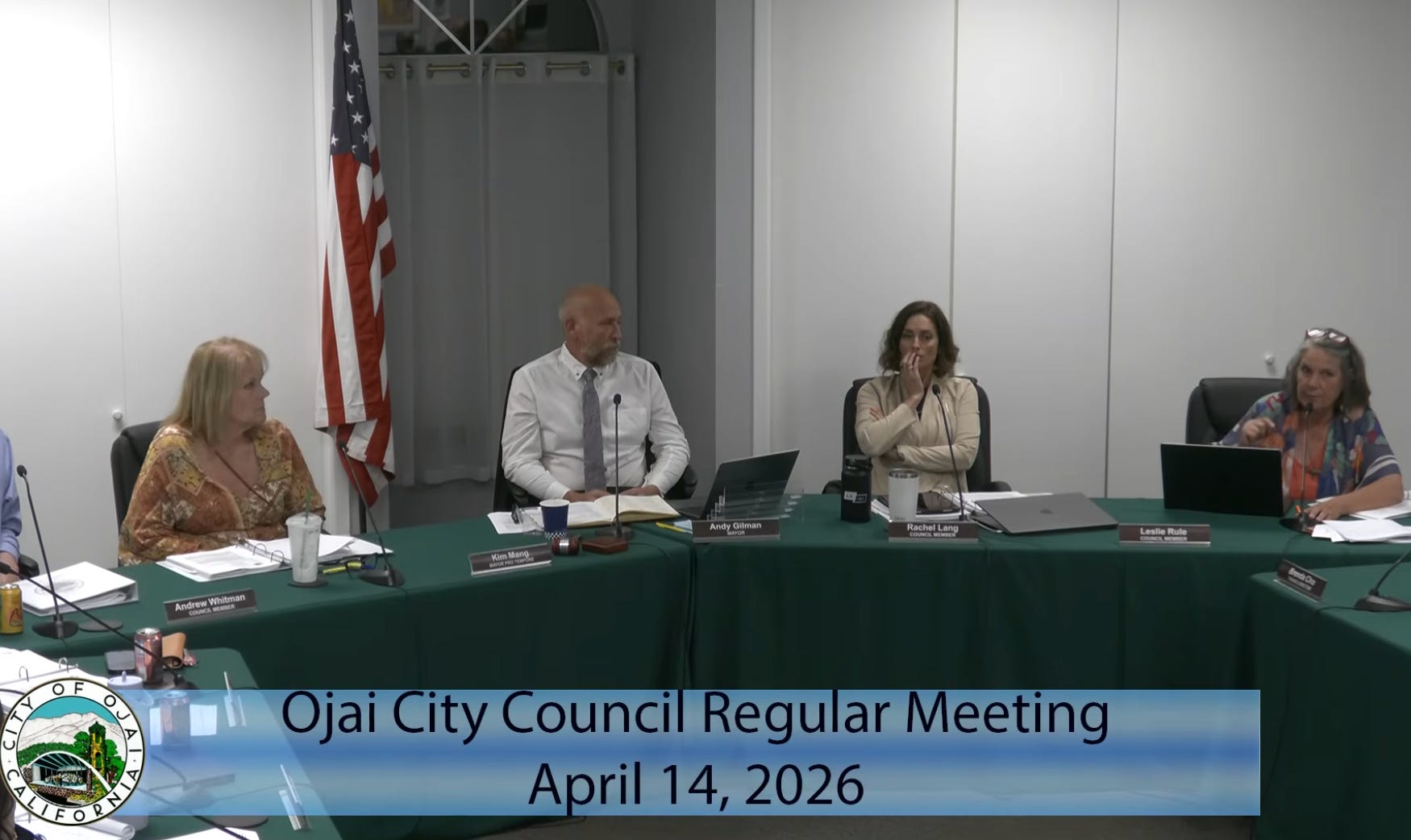
“I don’t appreciate a gun to my head by anybody, Rule concluded. “So I’m voting yes with a gun to my head because I can’t possibly vote no.”
Gilman’s motion passed 3-2. And folks, at that point it was about 10 p.m.
I packed my things and left before the next item, a discussion of City Council protocols. The Council adjourned a half hour later.
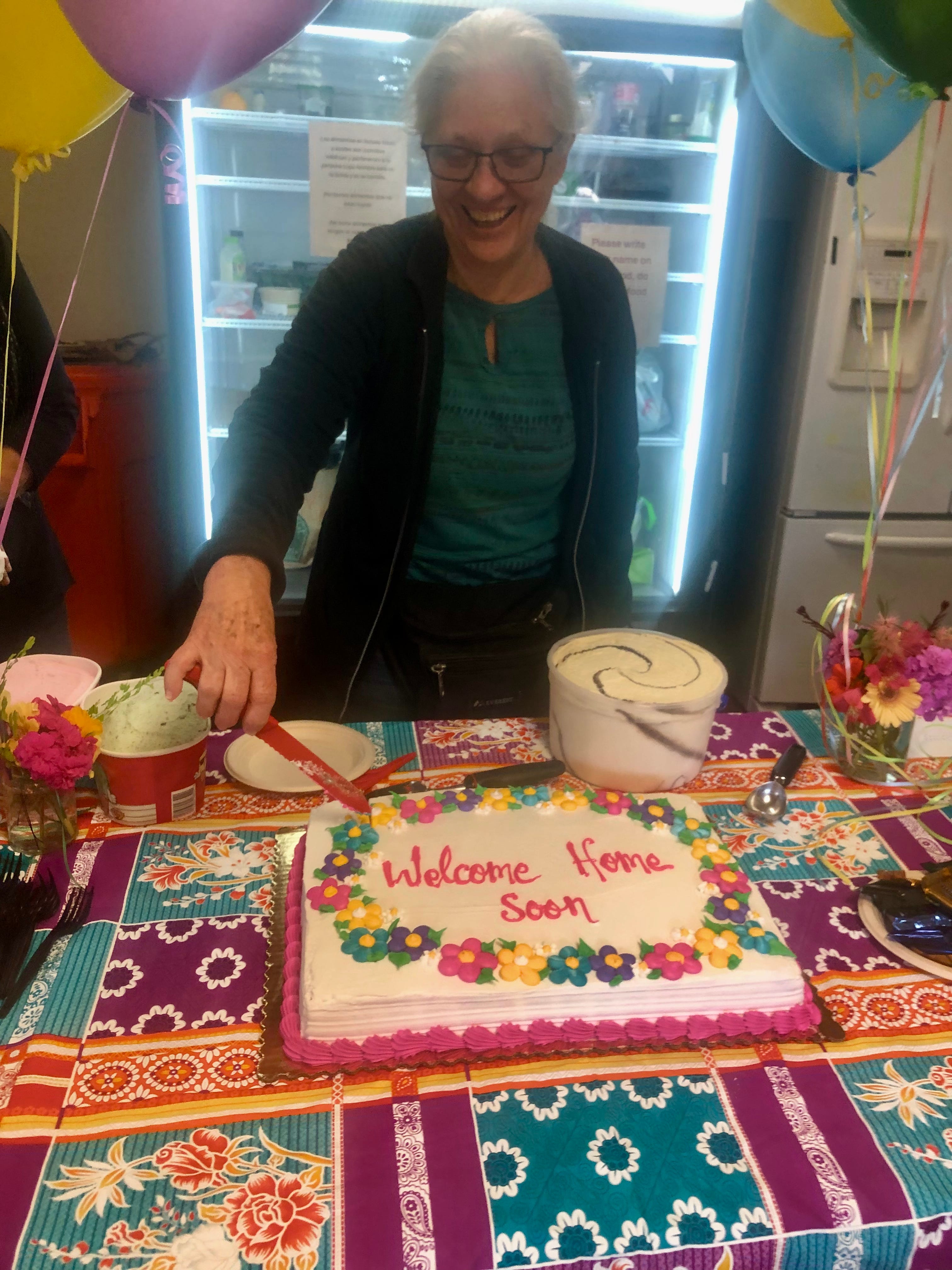
Two days later, April 16th, residents of Ojai Tent Town celebrated with cake and ice cream. Pink frosted lettering on the cake read “Welcome Home Soon.”
Admittedly, I have a weird sense of humor.
Truly, this is cinematic.
In which members of the public can say (basically) whatever they want, on any topic not on the agenda, for three minutes. Highly democratic. Always interesting.
Meaning I thought it was hilarious.
The project desperately needs a new name.