TONIGHT: Another Hurdle to House the Homeless
The project formerly known as "Cabin Village" is over budget and a new funding source is on the table.
Greetings readers!
For folks following Ojai’s state-funded permanent supportive housing project for the chronically homeless (formerly known as “Cabin Village”), I want to make you aware of an Ojai City Council meeting happening tonight, April 14th.
But first: a bit of background.
Just prior to Thanksgiving 2023, a grandmother who raised her children in Ojai moved into a tent at Ojai City Hall. She couldn’t find an affordable local rental and her only other option — camping at Lake Casitas — frightened her. She joined 20-35 other campers on the 8-acre city campus. This woman, now in her late seventies, lives at Ojai City Hall to this day. She neighbors about 20 others, many of whom are elderly and disabled.
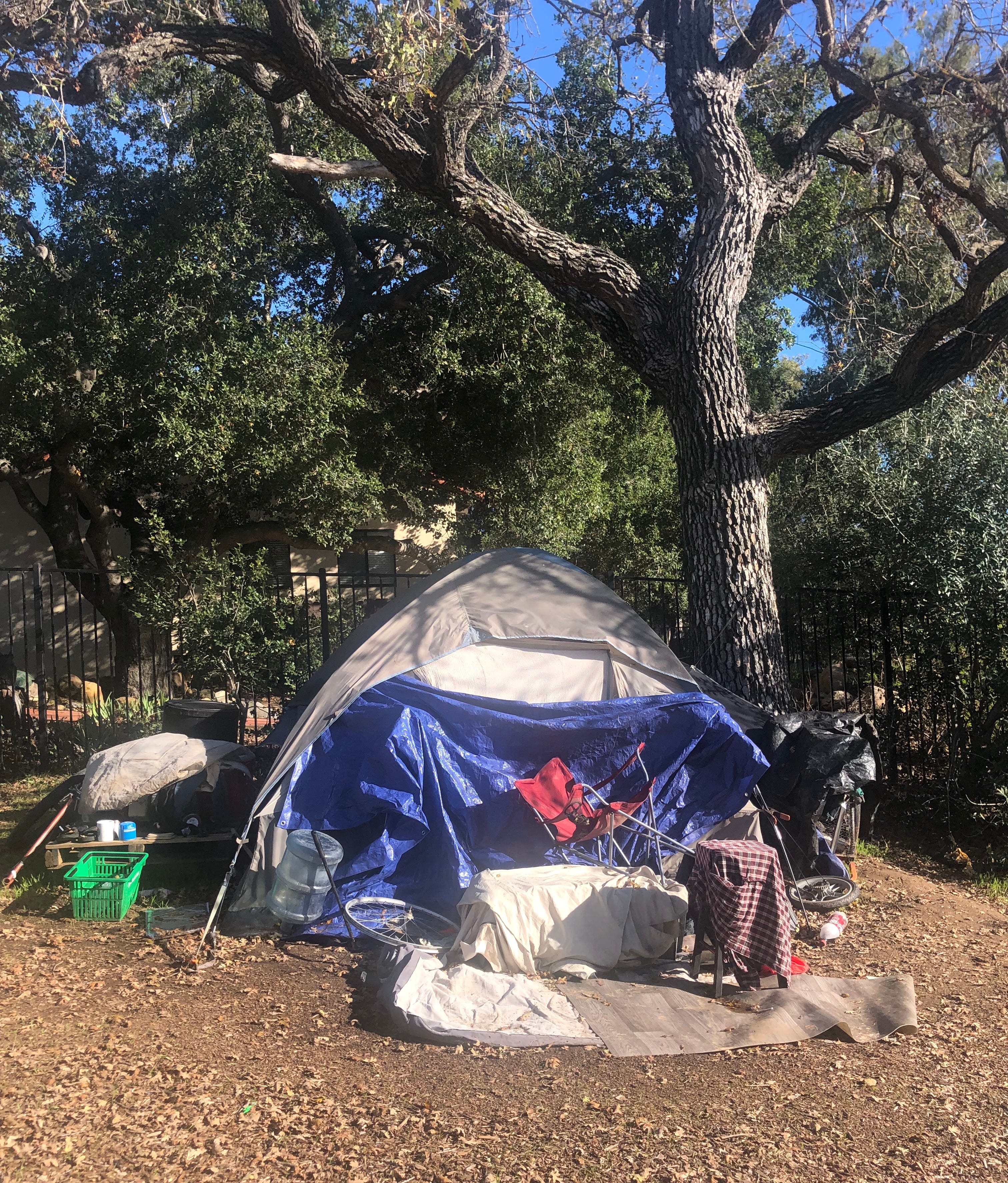
The camp at City Hall and a citizen-led Homelessness Task Force motivated Councilwomen Rachel Lang, Leslie Rule and (now former Councilwoman) Suza Francina to vote to submit a grant application to the state’s Encampment Resolution Fund on January 23, 2024. The application proposed constructing 20-unit permanent supportive housing project for Ojai’s homeless in partnership with developer Dignity Moves. Councilman Andrew Whitman and former Mayor Betsy Stix voted in opposition, citing concerns about the project budget (which was incomplete at the time).
And that’s how — almost exactly two years ago — the City of Ojai won a $12.7 million grant to resolve the City Hall encampment by building housing for the homeless. The project expanded to 30 units in June of that year (that episode is explained in detail here).
Over the interim two years, public City Council meetings have hosted numerous debates over the project’s location, the developer, and the project budget. That discourse will continue this evening. So let me get you up to present.
In July 2025, Dignity Moves (alongside the City of Ojai) issued a “request for proposals” (RFP) to general contractors for the construction of the 30-unit housing project at the City’s former public works yard (the location was approved in August of 2024, and again in March 2025). The bidders were asked to keep the project under $9.5 million.
Each bid came in at over $10 million, even with cost-saving measures. (Wait, why does the City want to keep the development budget under $9.5 million when the grant is for $12.7 million? Future operating costs.)
Anyways — you see the issue.
Here’s the other bit of news to be discussed on April 14th: Dignity Moves has put a new funding source on the table. According to a City staff report, Dignity Moves has secured a $1 million private donation from the Balay Ko Foundation to support the project. But this money comes with a caveat. The donation requires that five of the 30 housing units be made available to transitional-aged youth (typically 18-24-year-olds struggling with homelessness). This is the population served by Ojai’s Mesa Farm.
One potential wrinkle here (as I see it) is that transitional-aged youth, by definition, would age out of the project, which is currently defined as permanent housing. Also important: if the Council decides to move forward with this change, the state will have to approve it.
The Balay Ko foundation has not returned my request for comment, and Dignity Moves has politely declined to provide more information about the potential donation.
Tonight, the City Council will be asked to affirm Dignity Move’s selection of the project contractor (the lowest bidder) and take action on the new potential funding source. They may choose to do something else. I’ll note that the person to watch this evening will be Councilwoman Rule, who initially supported the project, but has recently suggested alternative locations and raised budget concerns.
Now, in closing, I’d like to use my privilege as the typer here and share one final thought. I’ve spent a lot of time with the people of Ojai Tent Town. Over the past two years, they’ve weathered extreme heat, rain, cold, rodent infestations, and the challenge of living without a reliable shower. Many struggle with chronic health conditions. Some residents have died. Others have told me they fear they’ll die before the promised housing is constructed.
That’s simply the reality.
I’ll post updates from this evening on social media, though it may take me 24 hours or so to provide a full read-out. If you wish to support this work — consider the options below!


It’ll be interesting to see what new you learn at the next meeting. One thing on transition age young adults is sometimes it just means they’ll be placed in the housing at that age but aren’t exited as they get older. For many TAY they may end up moving out in a few years as many are mobile at that age, going to college, jobs, military, family formation etc. In housing programs I’ve seen a few may stick around more permanently so there might be a 28 year old or a 32 year old old still there, but most end up launching into adulthoods where they don’t need the housing any longer.
Excellent reporting as always, Andra. You are about the only news source I can trust these days 🙄😄