Catching up with George Retes, the Ventura veteran pursuing a lawsuit against the U.S. Government
Retes, a U.S. citizen and an Army veteran, was detained by federal immigration agents for three days in July. He was never charged with a crime.

Greetings readers. Before we kick off today, I want to express my alarm at our federal government’s overt authoritarianism, violence, and its disregard for our Constitution, human rights, and basic facts. I recently wrote a letter to the editor of the Ojai Valley News on this topic. If you value democracy, if you value the rule of law, if you believe in the equality of all people, I believe it’s time to stand up and say so.
Onward to today’s story, which is sadly relevant.
I had the opportunity to speak with Ventura veteran George Retes back in July, shortly after he was released from federal detention in Los Angeles.
Recall: Retes, then 25, encountered a federal immigration operation at his workplace on July 10th of last year. Retes, who was on his way to his security guard job at Glass House Farms’ Camarillo location, was stopped by masked federal agents who broke his car window. Retes was then pepper sprayed, pulled out of his car, thrown to the ground, detained, and released with no charges three days later.
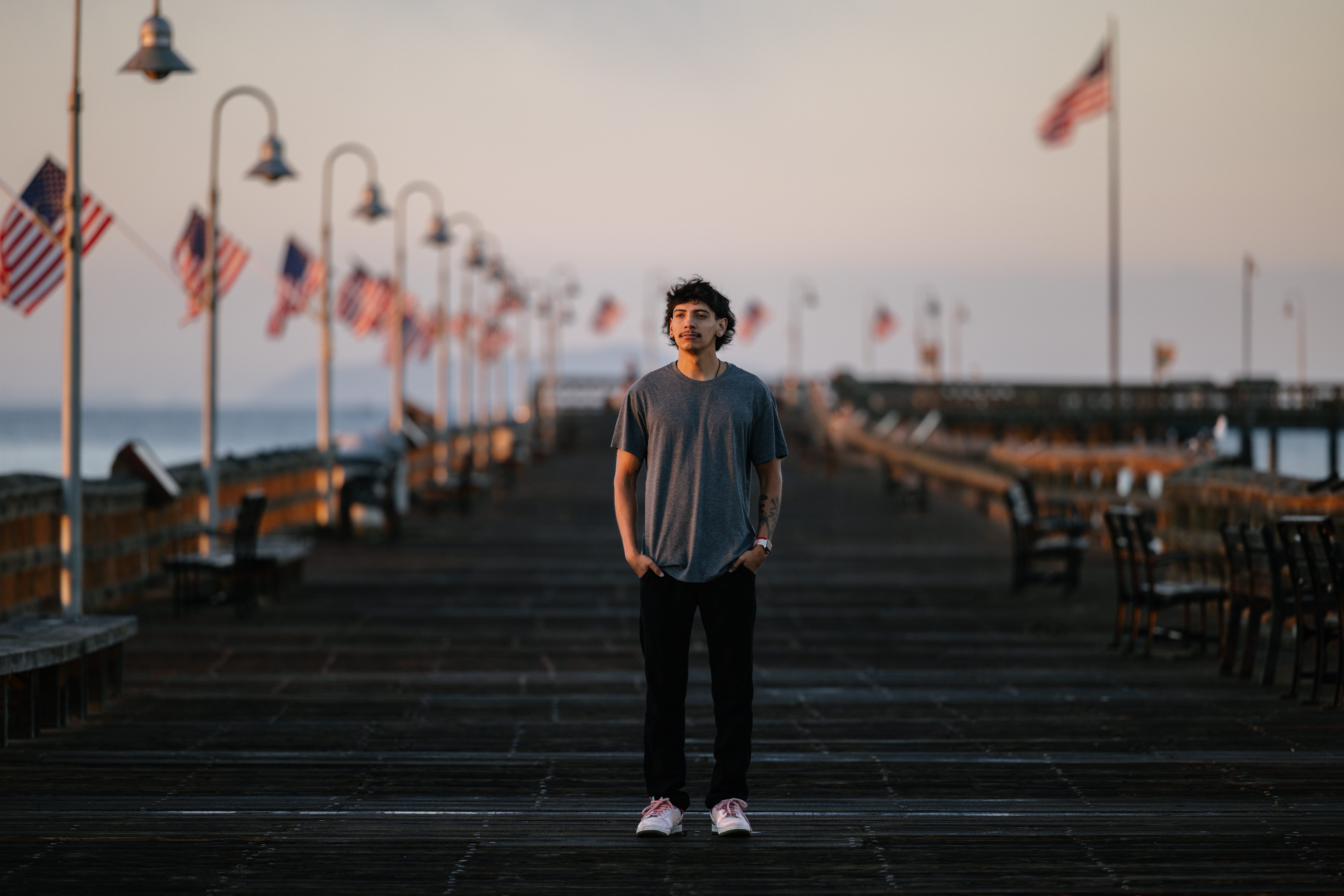
His story has since been featured in the New York Times and myriad national publications.
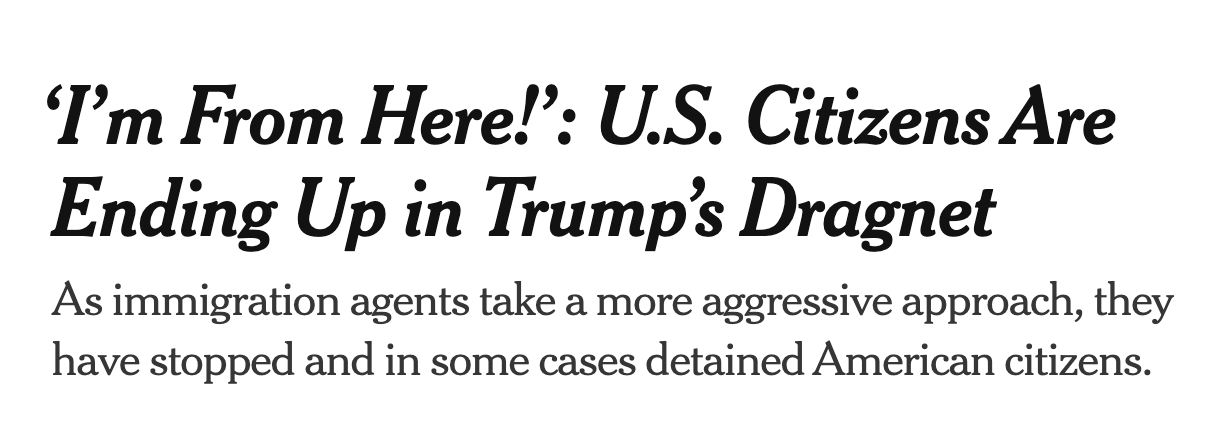
The U.S. Department of Homeland Security (DHS) responded to the New York Times story 48 hours later, via press release.
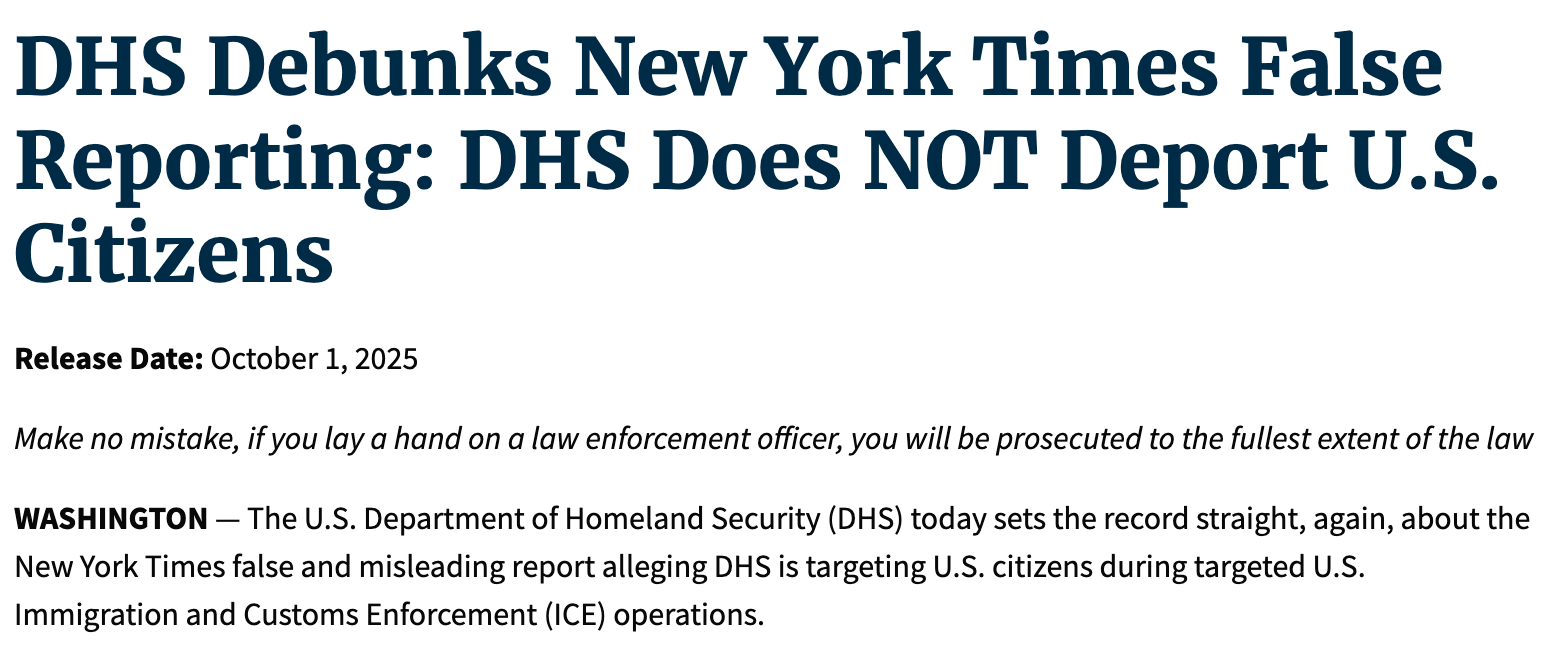

This federal government press release continues by naming each of the men in the story, including Retes.
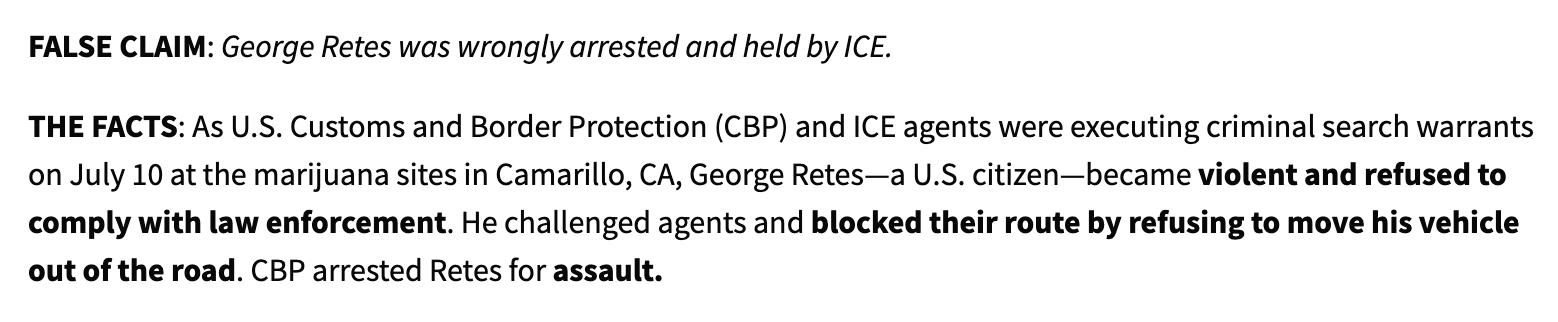
This official U.S. government statement conflicts with Retes’ account, helicopter footage of the incident, and the images below, by photojournalist Blake Fagan.


One detail that I keep fixating on is the bumper sticker on the left side of Retes’ rear window: “Iraq Combat Veteran.”
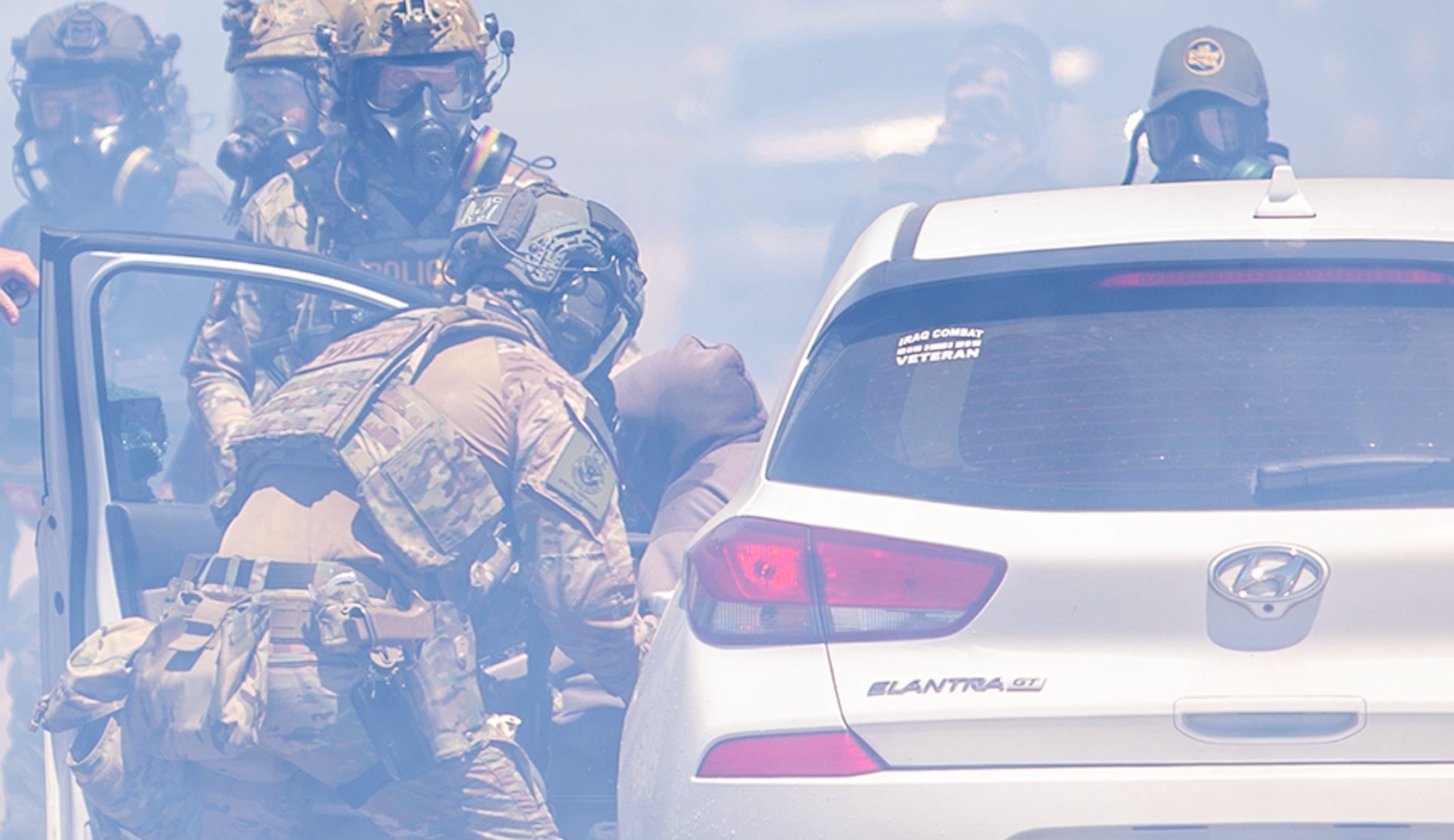
Fagan recalls the moment clearly — it was the first time he’d documented an ICE raid. “I think about it every day,” he told me.
Fagan had been on scene at Glass House for approximately 20 minutes when federal agents dispersed a round of tear gas, he said. Fagan turned around to shoot “into” the gas. That’s when he captured Retes being pulled out of his car by federal agents.
I recounted the DHS narrative to Fagan — that it was Retes who “became violent.”
“What I saw with my eyes [is that George] was at the front of the line in his car and he couldn’t back up or go forward. There were cars behind him and then there were feds in front of him. He was kind of just sitting in his car and they went up and opened the door and pulled him out,” Fagan said.
After spending three days in federal captivity in Los Angeles, Retes was released with no charges. He has since teamed up with the non-profit Institute for Justice, and has taken steps to sue the federal government under the Federal Tort Claims Act.
“I’m calling out the federal government not just for what they did to me, but for what they are doing to others. I’m continuing to fight for this country, now as a civilian,” Retes said in a press release.
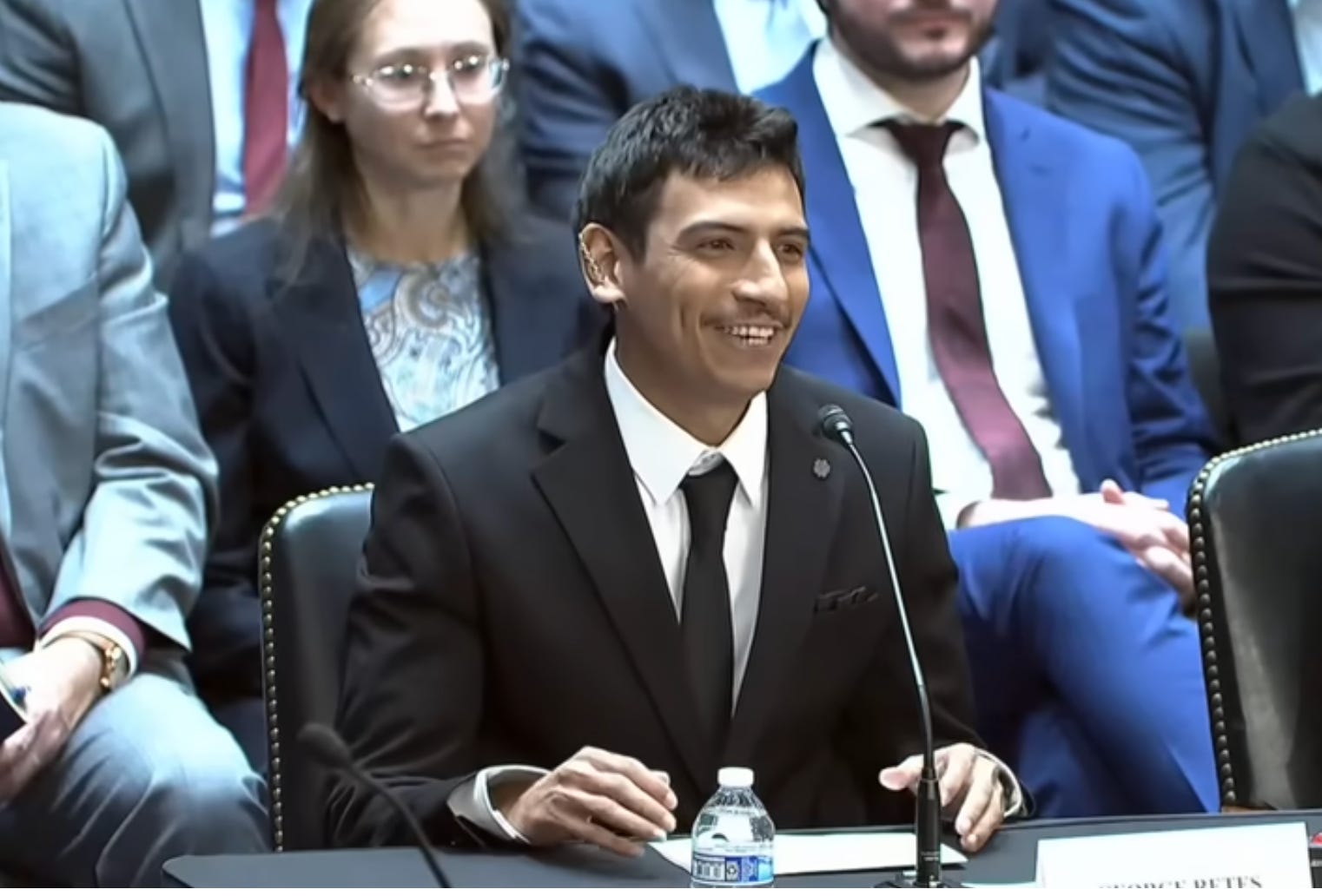
He’s been on a journey ever since. In October, Retes traveled to Washington, D.C. for the first time. On December 9th, he returned to the Capitol to testify to his experience during a “bicameral public forum” hosted by Senator Richard Blumenthal (D-CT) and Congressman Robert Garcia (D-CA).
Wait — what’s a bicameral public forum? Good question!
Bicameral refers to both chambers of Congress — the House and the Senate. Typically, congressional fact-finding missions are hosted by committees of appointed Republicans and Democrats. Each chamber of Congress has its own committees, and their fact-finding sessions are called “hearings.” Blumenthal and Garcia’s “forum” was not technically a “hearing” because there were no Republicans involved. This could also be referred to as a “shadow hearing.”
“Chances are very slight that we’ll have any Republicans here today,” Blumenthal commented as he kicked off the forum. “And I regret that fact. Really, sincerely, I regret that we will have only Democrats in this hearing because Republicans should be here to hold the administration accountable, just as we are doing.”
Next, Blumenthal asked Retes to share his story.
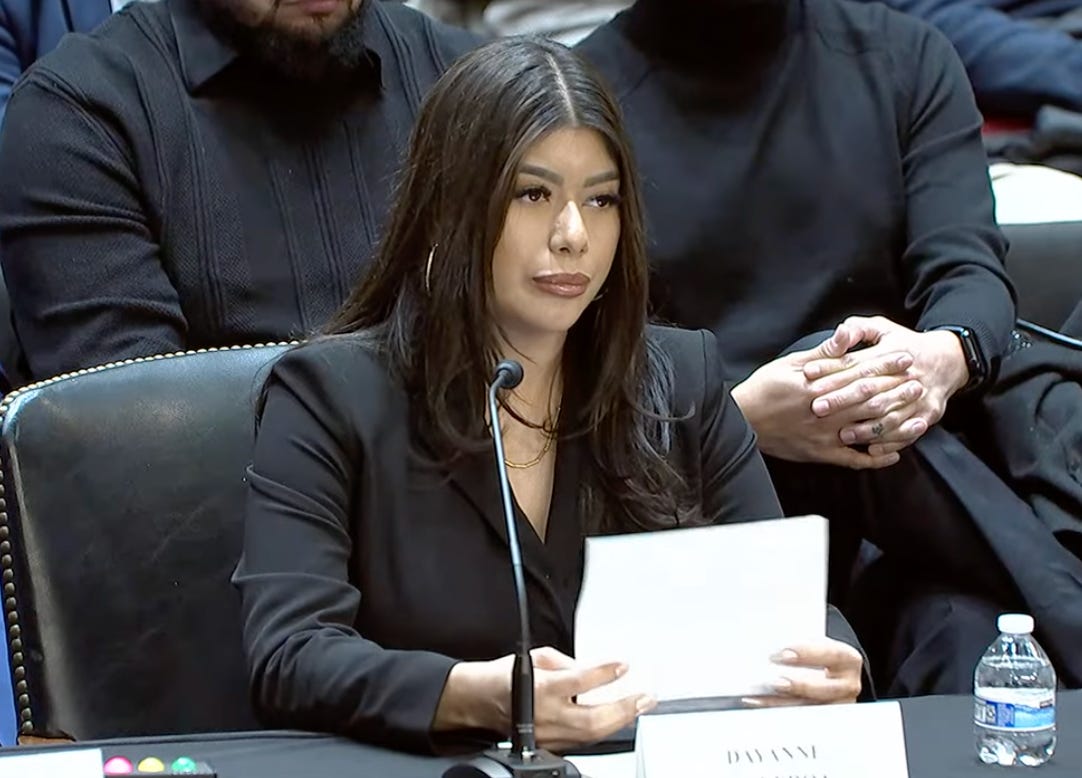
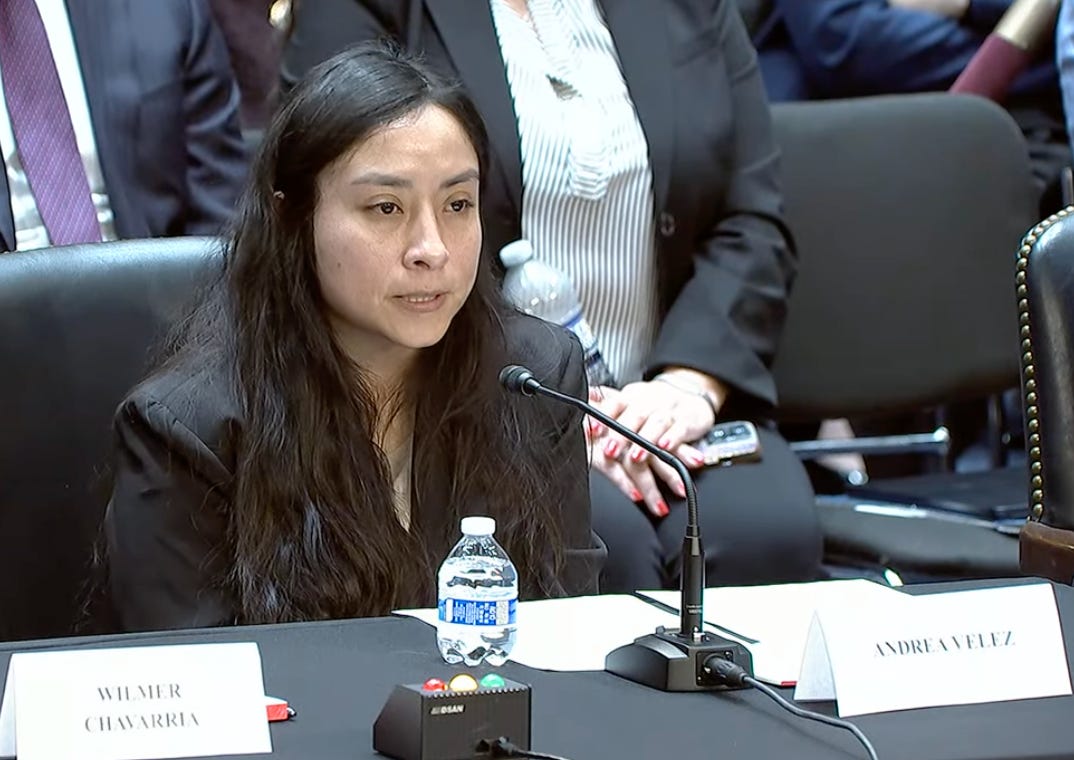
Retes was joined by four other U.S. citizens — Wilmer Chavarria, Dayanne Figueroa, Javier Ramirez, and Andrea Velez — who shared their experiences being detained, assaulted, and denied their constitutional rights by DHS agents. Readers can watch the full session here.
The same day, Blumenthal released a report called “Unchecked Authority: Examining the Trump Administration’s Extrajudicial Immigration Detentions of U.S. Citizens.” The report was authored by the minority staff of the Senate’s Permanent Subcommittee on Investigations. What does that mean? Again, the majority members of that committee — the Republicans — did not participate.
“This report ought to shock America’s conscience,” Blumenthal commented.
“The Subcommittee’s findings add to a growing body of evidence that the Trump Administration is seeking to build a nationwide paramilitary force with vast resources that lawlessly detains citizens based on its own whims — an effort which has a number of unfortunate and obvious historical parallels.” — Unchecked Authority: Examining the Trump Administration’s Extrajudicial Immigration Detentions of U.S. Citizens
I had the opportunity to catch up with Retes in late December. This interview has been edited and condensed for clarity and readability. All brackets and parentheses were added in the editing process.
Andra Belknap: Last we talked was in July, in the immediate aftermath of you being detained and held for three days. Can you tell me how that has impacted you in the months since?
George Retes: Oh my God, that’s been so long… I guess how all this has impacted me has been just, I mean, work put me on suspension for a couple of weeks, and so I didn’t end up going back to work for them, just because of just the way the situation was handled and everything. And so I guess it affected me job-wise and just my work, my money…
This has really, I guess, taken over my life in general, doing all these interviews, going on TV, traveling to Washington, it takes a lot, honestly. I’ve kind of just been trying to figure out what I want to do with my life now since I stopped working, just trying to figure out what the next step is in my life knowing that this isn’t going to be done anytime soon. I am kind of just taking it day by day, if I’m being honest with you.
AB: What does it feel like to all of a sudden have your face all over the news? I see you on social media all the time. What is that like for you?
GR: I mean, it’s no different if I’m being honest with you. I mean, even though I’m all over the news and I’m all over social media, I’m still me. It’s like it doesn’t really change my life in any way because I mean, I still sit here. I still sit here in my house alone… And so even though I’m all over social media, it’s kind of two different lives. I’d say people know me, but they don’t know me.
AB: How is your family doing?
GR: They’re doing good. I mean, they’ve been happy since me being free, but I mean, I try to keep them away from all this as much as possible. It’s not their responsibility. I just don’t want to put any burden or weight on them, and it’s not their responsibility to handle any of this stuff. I just keep them [as] far away from it as much as possible.
AB: I remember that you have young kids. I wonder, do they have any sense that their dad’s suing the government, their dad was assaulted by the U.S. government? Do they have any sense of what kind of fight you’re fighting?
GR: No. My kids have no clue. My daughter is three. My son has just turned nine, and I just keep it away from him as much as possible. I just tell him that I go to work, and so that’s what all these trips are for.
There’s no reason for them to know right now. So, if when they get older, if they want to know what I’m doing or what I did or what I went through, I mean, they’re more than welcome to go and look and see what I’ve done. But as far as now, they should just focus on being kids and living their lives.
AB: What is the status of the lawsuit that you’re involved in to the degree that you can talk about it?
GR: So right now, I am currently just waiting, I guess it’s like, I would say it’s a probationary period. I got to file these claims under the [Federal Tort Claims Act] about everything that happened, and I [have] to wait six months for the response before I could go into or file an actual lawsuit and go into a courthouse or something. And so my lawyers filed the claims sometime in July of [2025]. And so February of [this] year is when the six-month period ends. And so once [that] period ends, the next day they’re going to file the lawsuit.
AB: So you went on this whole journey to DC. My first question is, how did that come to be? Who reached out, why you decided to move forward with it, that kind of stuff.
GR: Honestly, just by doing all these interviews, when I first started this out, [when] I got released or whatnot. I mean, I didn’t have my lawyers at the time. It was just me trying to unravel all this.
I started doing interviews. I started being on TV, and I guess my story just kind of spread… I like to say what got me to Washington, DC [was] sharing my story — not staying silent, not going away, and just continuing to push. I think that’s what got me to Washington, DC: the constant sharing of my story, the constant talking, and not quitting.
[Then] it was just more senators reaching out, people from Congress, reaching out, wanting to hear my story in person. And so I ended up going to Washington for the first time in October. I spoke to a couple of lawmakers in October, just one-on-one, about what had happened to me and my solution for everything. And yeah, that was my first time going to Washington, DC. From there, they said that they were doing hearings and they brought me to the hearing [in December.]
AB: I’m asking this because I used to work in Congress and I’m a dork about this kind of stuff, and I think it’s super interesting. So I’m just wondering if you had any conversations with lawmakers that you remember, where you felt heard?
GR: Honestly, every single one, every single person that I spoke to honestly, has heard me out, has really listened to my story and listened to my solution. My biggest thing, or my biggest takeaway from all of it is just, it’s a political game. Everyone thinks what happened to me is shitty and it’s terrible, but nothing could really be done… because our government is ruled by — and our laws are ruled by — political sides. So it’s always like, we need Republicans for this, or we need Democrats for that, and it should be a nonpartisan issue. But that’s the hardest thing, just the political differences and everything like that. Everyone was more than willing to listen and understand, but [it] is so hard to make change because of the political differences.
AB: Had you been to DC prior to October?
GR: No. That October meeting, going, meeting all these Congresspeople and lawmakers was my first time going to Washington, DC. So it was cool.
AB: Can you tell me about what that felt like? Just, you’re a guy from Ventura, you end up in Washington, DC, and you’re going to be testifying. It all sounds very surreal.
GR: Honestly, you’re right. It’s very surreal. I mean, I am just this kid who, I mean, I am not going to say my life was the hardest in the world or anything, but I mean, I’ve never had it easy. I mean, I grew up in Santa Paula. I kind of just bounced around my entire childhood. I just never thought I would be in this position, trying to make a difference the way that I am.
It’s very surreal to be in this position and have this opportunity — even though it was kind of forced upon me — and it’s not really a good thing. But you’re right, it’s very surreal. I still have trouble wrapping my head around what I’m doing most of the time.
Like I said, I take it a day at a time. I try not to get too overwhelmed because when I really do think about it, I think, ‘Oh my God, I’m talking to these senators,’ I’m talking to all these important people. So I just take it day by day, and I like to think these are just normal people I’m talking to. It’s just another day for me. I try not to let it fill my head. I’m honestly just another person like anyone else, and I just want to do the right thing.
AB: And I appreciate you, for real. You mentioned that you shared a solution with lawmakers. What is the solution that you were sharing with them?
GR: So right now, the way that the law works, there is no recourse, or there’s no way to hold federal agents accountable. So I mean, it doesn’t just go for ICE or CBP, but it also goes for IRS, FBI, any federal agency you could think of. They could absolutely do anything to anyone, violate any rights, and there’s absolutely nothing anyone could do about it. There’s no way to hold them accountable just because there’s no law that allows people to sue federal officials.
And so my solution, or our solution, with my lawyers, is to add a couple of words to the section 1983 statute that includes federal officials and hold them to the same standard as state officials. Because if state officials had done everything that they did to me, or if I ended up in a state prison, I would be in a courtroom right now. I would be able to get answers for everything that happened to me.
But because they’re federal officials, I have to wait six months. And then even when I get to the courthouse, the court is going to be like, ‘Sorry. But unfortunately, yes, your rights were violated, but there’s no law.’ There’s nothing I could do because there’s no law that allows you to sue for your rights being violated by federal officials.

AB: That’s shocking.
GR: They just shut the door in your face and it’s like, ‘Our hands are tied. We can’t do anything.’ And so that’s the solution, honestly, because I believe that the reason these people, all these officers and agents act the way they do is because they know they can’t be held responsible.
I mean, when they know they can’t get in trouble, why would they even care about doing things the right way when they know that there’s no law that holds them to a certain standard, and so they just go out here and do whatever they want. And so the solution is to hold them accountable for their actions. That’s what keeps our rights. Rights are when there’s accountability for violating them. So that is our solution, just to make them to be held accountable, the same as any other state officer.
I mean, no one should be above the law. It shouldn’t matter what badge you wear. Any person violates your rights, you should be able to get justice for what happened to you. So that’s the answer and that’s the solution.
AB: It’s shocking to me that there’s no legal recourse if a federal officer violates the law. That’s absolutely crazy.
GR: Insane. When I first heard it too, before all this started, I had no clue about any of this, if I’m being honest with you. My lawyers broke it down to me, and it just shocked me.
We go day to day thinking, we have these rights, and if anything happens to us, we will get justice. We could go to a courtroom. And so one day [they] explained it to me, it’s really shocking and it’s just eye-opening, and it’s just like, ‘What do you mean? We can’t just go to a courtroom and get justice for someone violating our rights?’
And so once they told me that, it kind of shifted my whole mindset from sharing my story to really giving people a solution to what could be done to stop everything. Because we could all share our story. We could all continue to shout from the top of our lungs, but at the end of the day, nothing’s going to stop. So instead of sitting here shouting and just looking back at how terrible everything is for me, it’s better to give people a solution so that all this stops. Nothing changes by just staying silent or not working to change anything. And so that’s what I’m trying to do. I’m trying to make a change so this stops.
AB: So you were getting ready to testify in Congress. Can you talk to me about what the preparation for giving testimony was like for you?
GR: I had a couple of days before to write a testimony about what I was going to say.
AB: Like a statement about what happened to you?
GR: Yeah, like a statement about what happened. I mean, I was able to write that. And then for me, I don’t know. I try not to, like I said, I try not to look too much into it because I’ll get overwhelmed.
I kind of just go in there and I kind of just do my thing. Honestly, however I act or however I’m feeling, whatever emotions come out while I’m up there or what I’m doing each time is completely different. I mean, I don’t practice before I do any of these interviews, before I go on TV or I give my testimony, or before I talk to any of these senators or congressmen or women. I just go in there, and I give them my a hundred percent of what happened and how I feel and what’s on my mind. I mean, I’m not there trying to persuade anyone or make them think of me a certain type of way. I’m just there to do what’s right and to do the right thing. I’m there to make change and do what I’m saying I’m doing. And so there is no real prep for me. I kind of just do it. You just got to do it.
AB: So obviously we’ve all seen the images of you testifying, but I would love to know when you’re testifying, what are you looking at? What are you seeing and hearing? What does that feel like?
GR: When I’m testifying, as I’m speaking, I just try to block everything out. Everyone who’s in there, I kind of just block it out, and I just focus on my paper, focus on speaking, focus on looking past everyone. I did get a little emotional when I was speaking because, like I said, I don’t really prepare. And so just talking about it and in that moment when I just block everyone out, just going back there, I did go back there a little bit. And so I did get emotional a little bit.
I just kind of take it for what it is, and it’s a different experience. I’m honestly a private person. I do stuff by myself. I am not a fan of being in the public eye. I am not this person who likes to share his life and everything I’m going through. I don’t open up much. I stay to myself. And so it’s completely different. It’s taken me on a completely different track. And even though I’m not this open person, I’ve really adapted really well.
And so I don’t know, honestly, it’s been fun. If I’m being honest with you, if I’m doing all this, I try not to look at the bad, all the terrible stuff that’s happened. You got to find the light in it. So I’ve just been finding the light in all this stuff, being there, and testifying. It was cool. It was like, I don’t know, normally people don’t get to do all that stuff. And so just being this kid from Ventura and having the life that I’ve lived so far, it’s just been really cool and just really interesting and so eye-opening. I honestly enjoy being given these opportunities even though I didn’t ask for it. And so it’s honestly a once-in-a-lifetime opportunity, even though it’s for a terrible situation, you gotta make both the best of it. And so that’s what I’m doing.
AB: I was also really, really moved by, I think there were four people testifying with you. I wonder if you had the opportunity to talk to those folks at all and share experiences?
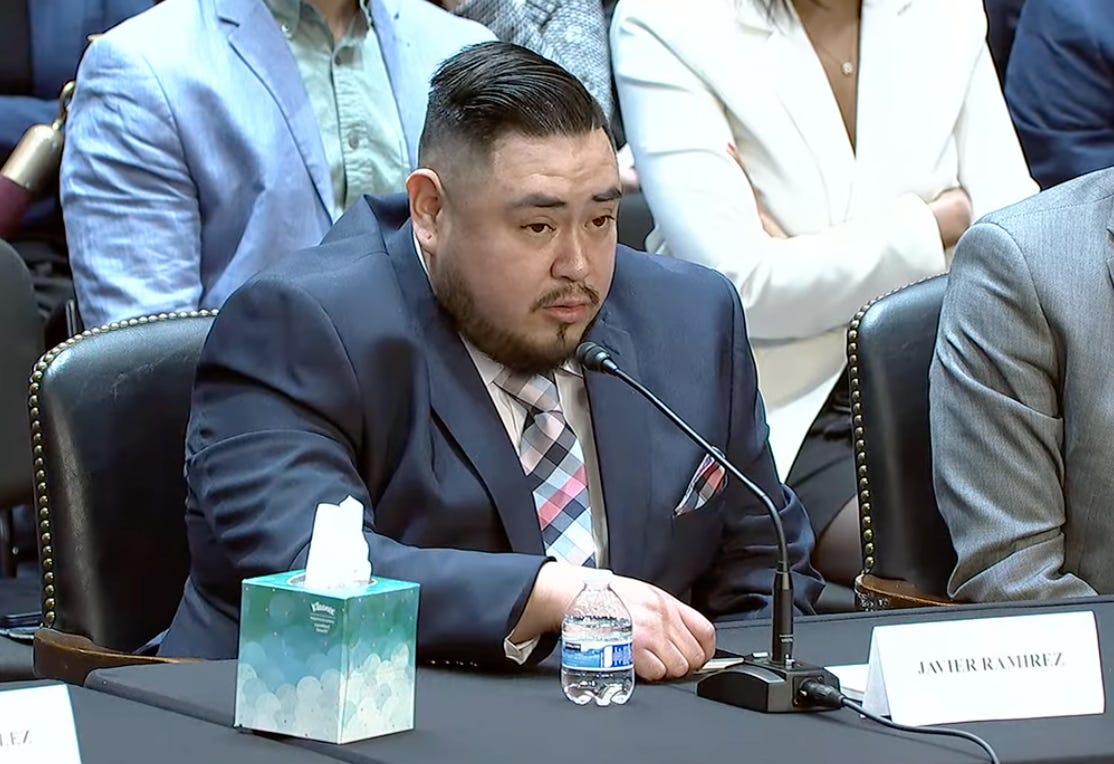
GR: I did get to talk to them. We met in a congressperson’s office before the hearing. And it was cool. I mean, we got to talk to each other. And I mean, I try to lighten up the mood and just talk them through it because I was able to see visually and just from the way they were talking, that they were nervous, that they just felt like it was a lot.
So I just tried my best to calm ‘em down, try to make them comfortable. And it was really nice to be able to have this connection with other people who have been through the same stuff, even though it’s not the best connection, but to really understand what someone else had gone through.
And not everyone handles it the same, so I’m glad that I was able to really lighten up their mood and just give them some positivity. Because even though it is terrible what happened to us, we’re all here to speak and to make change so that this doesn’t continue to happen.
AB: What was it like for you hearing what had happened to them?
GR: It was terrible. It’s very aggravating. It’s disappointing. I mean, I honestly hate seeing stuff like that. It’s just so terrible. You never want to see any badge or any person of authority abusing their power and subjecting other people to harm for that power. So honestly, it frustrates me. It makes me upset. It makes me just, honestly, it angers me.
AB: Me too.
GR: It makes me so upset. It’s so upsetting. Just seeing and hearing all these stories, what happened to other people. All I want to do, and all I try to do, is help other people and just look out for other people. And so just hearing all these stories and seeing what people are going through, and it’s just like, ‘Well, damn, I wish I could just help you.’ That’s all I want to do.
‘I wish I could have been there to help you. I wish I could have done something to stop all this from happening to you. I wish I could just help all you guys and make all this fucking pain stop and just make it never happen.’
And it sucks. Honestly, it sucks hearing all their stories. It sucks knowing that all that happened
AB: So this is so random, but I noticed you were wearing these earrings while you were testifying, and I am very curious about the earrings and what they were and why you decided to wear them. Because I am interested in aesthetic choices.
GR: Thank you so much for noticing those. I appreciate it. I know I got them because they looked really cool. But yeah, one of them was a cherry blossom, and the other one was just a stack.
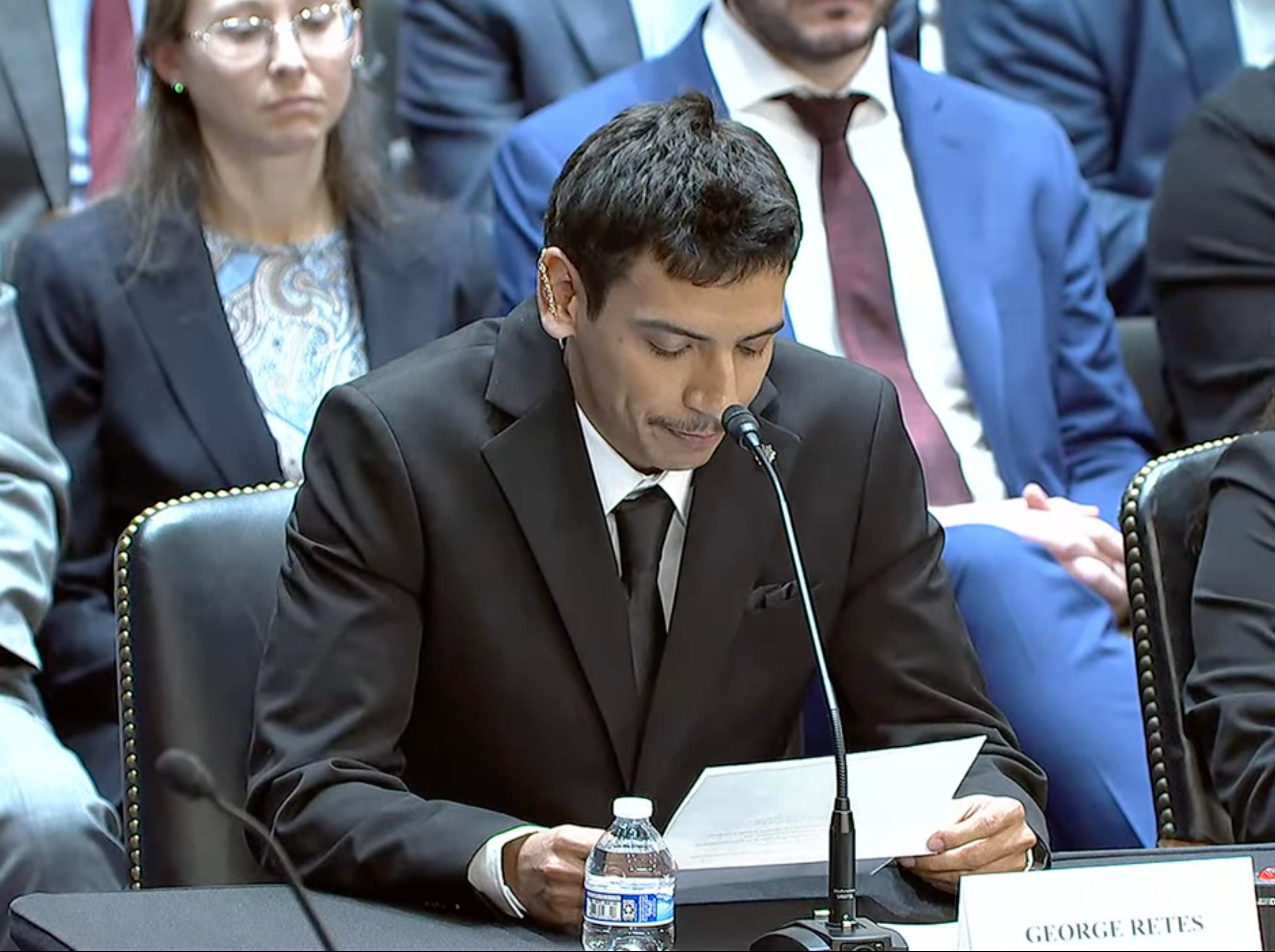
The cherry blossoms, I mean, I just love the thought of cherry blossoms. They’re just so beautiful, and it’s just a symbol of just renewal every time they regrow. Every single time. It’s just this rebirth of beautifulness. And so that’s why I wore the cherry blossoms that day, it was just the significance of what a cherry blossom means.
For everyone standing up there and testifying and just everyone that’s held down, it was more of just a symbol of, even though all this is happening, we will grow from this. This isn’t forever.
And so there will come a time where things will change and things will be different, And we’re not going to let all this terrible stuff hold us down.
AB: Totally. Have you seen or interacted with ICE or CBP since you were detained? I’m just curious.
GR: No, I have not. I haven’t seen them, haven’t drove by any of that. I haven’t seen any of them since.
AB: And so you did not go back to work at Glass House, and your employer suspended you? That’s so weird to me. The suspension part.
GR: Yeah. Also, I didn’t specifically work for Glasshouse. I worked for a third-party security company. Glasshouse Farms just contracted them out.
AB: Thank you for clarifying
GR: My security company put me on suspension until I was able to prove that I was innocent.
AB: Wow. And you have not gone back to work for that security company, is that right?
GR: Yeah, I have not gone back to work for ‘em.
AB: I’m just curious, are you employed right now? I say that understanding that you’re very busy with all of these interviews.
GR: I’m looking for a job. I’ve been going to interviews and stuff, but I mean, so I’ve had interviews. I’m just waiting for these callbacks to see, to get a job, if I’m being honest with you.
AB: So you not only were traumatized and incarcerated, you also lost your job.
GR: Yeah. And so I don’t know. It’s kind of crazy because I didn’t know what I wanted to do. I didn’t want to be a security guard all my life. It was just easy. And it’s just something I’ve always done. And I’m only — was only — 25 at the time. And so it’s like I have no clue what I still want to do for the rest of my life, even going through all this… I still have so much life to live.
AB: Yes, you do.
GR: I’m just trying to get a job right now just to get money coming in to provide for my kids and myself. And so, yeah. So you could add in there if I’m looking for a job, if anyone is open.
AB: Is there any particular type of work that you’re pursuing?
GR: I’m a very open person. I’ve gone to the school for so many [things]. I went, I got my CDL license to drive a semi-truck. I went to dental assistant school to become a dental assistant. And so I’ve bounced around just exploring what there is in this world and what I want to do for the rest of my life. So I’m very open to figuring out what that next step is for me. So anything, honestly.
AB: You’re very clearly a smart and kind person with strong values, so I have no doubt that you’ll find the thing for you. But also, I have a lot of empathy for you just going through this situation. It’s incredibly fucked up. But I also know that the community is proud of you.
GR: Thank you. I really appreciate it.
Andra, what a incredible interview! No mention of the lawyers -- local?-- or our Cogressiojal Reps or Senators? THis should get national attention--please send to MSNow, Meidas, ec....regular people should know this.... excellent reporting! Prayers for all....